Visbody M303D Body Scanner & Posture Analysis
Professional AI-powered body assessment platform. Realistic 3D avatar in 32 seconds, 9-point skeletal posture analysis, 14 automatic circumferences. A measurement, visualization, and decision-support tool for professionals.
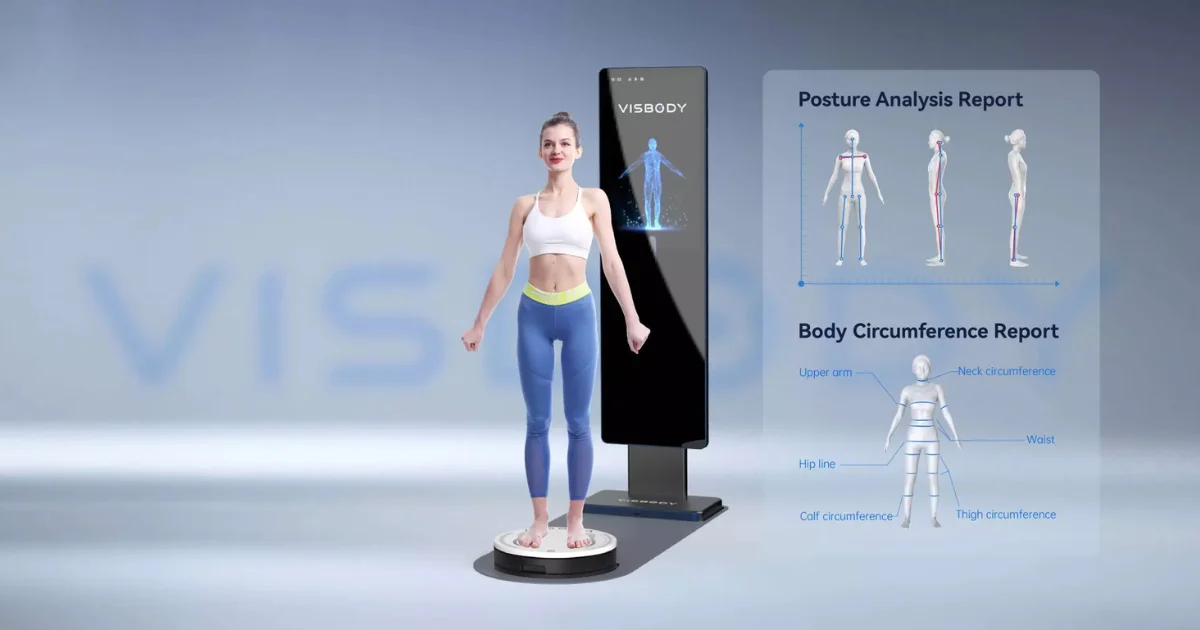
What Visbody M30 Does
An integrated scanning, analysis, and visualization system that provides objective data about the body — beyond weight, BMI, or subjective estimates
360° 3D Scanning
Creates a realistic 3D avatar of the entire body in just 32 seconds. 3D optical reconstruction with millimeter-level accuracy using Intel® RealSense™ sensors.
9-Point Posture Analysis
Automatic static posture evaluation through 3D skeletal detection. Identifies imbalances, asymmetries, and deviations from optimal alignment.
14 Body Circumferences
Automated measurements of neck, arms, chest, waist, hips, thighs, and calves. Eliminates variability of manual measurements.
Visual Progress Tracking
Track progress by comparing up to 8 historical records. Before/after 3D avatars for clear visualization of changes.
[Placeholder: 3D Body Avatar Image — visualization from multiple angles]
Posture Analysis — The Key Differentiator
Most body composition tools ignore posture. Visbody M30 uses 3D skeletal detection to evaluate body alignment and identify imbalances that affect health and performance.
Head and Neck
Assessments:
- Forward head posture
- Lateral head tilt
Clinical relevance:
Cervical tension, headaches, issues associated with prolonged screen time
Shoulders
Assessments:
- Rounded shoulders (left/right)
- Shoulder asymmetry
Clinical relevance:
Respiratory function, scapular tension, impingement risk
Pelvis
Assessments:
- Anterior pelvic tilt
- Posterior pelvic tilt
Clinical relevance:
Lumbar curvature, trunk stability, spinal load distribution
Knees and Legs
Assessments:
- Knee hyperextension
- Leg type (varus/valgus)
Clinical relevance:
Joint health, weight distribution, risk of meniscus and ligament injuries
[Placeholder: Posture Analysis Report — skeletal points visualization and deviations]
Why Posture Analysis Matters
For Rehabilitation and Physiotherapy
Objective evaluation at treatment start and monitoring of postural correction progress over time.
For Injury Prevention
Identifying imbalances before they cause problems. Essential for athletes and active individuals.
For Physical Performance
Optimal alignment improves movement efficiency and reduces the risk of compensation and overload.
For Long-Term Health
Untreated postural imbalances lead to chronic problems. Early detection allows preventive intervention.
Why 3D Analysis Is Superior to BMI and BIA
BMI and BIA are useful but incomplete tools. Visbody M30 completes the picture with data that traditional methods cannot provide.
Comparison: Traditional Methods vs. Visbody M30
| Aspect | Traditional BMI / BIA | Visbody M30 |
|---|---|---|
| What it measures | Weight, height, electrical impedance | Actual 3D shape, circumferences, posture, composition |
| Visualization | Numbers and abstract graphs | Realistic 3D avatar, visual comparison |
| Posture | Not evaluated | 9-point 3D skeletal analysis |
| Body shape | Not evaluated | Detection and monitoring of shape changes |
| Variability factors | Hydration, room temperature, position | Minimal — independent optical scanning |
| Client motivation | Difficult to communicate progress | Convincing visual avatar, clear before/after |
BMI and BIA Limitations — In Detail
BMI (Body Mass Index)
BMI uses only weight and height. It doesn't differentiate between fat and muscle. A muscular athlete can have an "overweight" BMI without having excess fat. BMI says nothing about shape or distribution.
BIA (Bioelectrical Impedance Analysis)
BIA measures body composition through weak electrical current. It is influenced by hydration, temperature, time of day, and body position. It provides no information about shape, proportions, or posture — only numerical estimates.
What Visbody M30 Adds
3D optical scanning visualizes actual shape, measures circumferences with millimeter precision, and evaluates posture. This data complements, not replaces, information from BIA or BMI.
Professional Applications
Visbody M30 is relevant for any professional who works with the human body and needs objective, measurable, and visually communicable data
Fitness Clubs and Studios
Visbody M30 transforms the initial assessment into a memorable experience and provides a powerful tool for member retention.
Concrete Benefits
- Objective baseline assessment at member signup
- Progress monitoring with convincing visual avatars
- Client motivation through tangible 3D comparisons
- Competitive differentiation from other gyms
- Sales tool for premium memberships
Outcome
Members see results concretely, not just on the scale. Retention rate increases when progress is visible.
Personal Trainers
Objective data for training planning and demonstrating results, without subjective interpretations.
Concrete Benefits
- Measurable and documented starting point
- Identification of postural imbalances for correction
- Program personalization based on real data
- Demonstrating results to skeptical clients
- Justifying service value through visible results
Outcome
The trainer-client relationship is based on data, not impressions. Results are indisputable.
Medical Clinics and Doctors
Objective monitoring tool for general health, preventive medicine, and tracking patients with metabolic conditions.
Concrete Benefits
- Monitoring body mass distribution over time
- Objective assessment in general practice consultations
- Post-intervention or post-treatment patient tracking
- Complementary data for clinical decisions
- Visual documentation for medical records
Outcome
More effective communication with the patient. Visual data facilitates understanding and adherence.
Nutritionists and Dietitians
Correlating nutritional plans with actual body composition changes, not just the number on the scale.
Concrete Benefits
- Monitoring circumferences relevant to goals
- Differentiating between fat loss and muscle loss
- Visualizing diet impact on body shape
- Adjusting plans based on objective data
- Increasing patient adherence through visual feedback
Outcome
The patient understands that the diet works even when weight stagnates — fat mass decreases, shape changes.
Weight Loss and Body Shaping Clinics
Professional before/after documentation, treatment validation, and client accountability.
Concrete Benefits
- Objective before/after treatment documentation
- Validation of procedure effectiveness (cryolipolysis, etc.)
- Client accountability through visual evidence
- Reduction of disputes and complaints
- Material for case studies and ethical marketing
Outcome
The client sees results in 3D, not just in the mirror. Disputes about treatment effectiveness disappear.
Diabetes and Metabolism Specialists
Monitoring adiposity distribution, a relevant factor in the context of metabolic and cardiovascular risk.
Concrete Benefits
- Visualization of abdominal fat distribution
- Monitoring waist circumference over time
- Visual context for discussions about metabolic risk
- Tracking impact of lifestyle interventions
- Effective communication about realistic goals
Outcome
The patient understands why fat distribution matters, not just total weight.
Physiotherapy and Rehabilitation
Objective postural assessment as a basis for rehabilitation protocols and progress monitoring.
Concrete Benefits
- Detailed postural assessment at treatment start
- Identification of asymmetries and imbalances
- Monitoring correction over time
- Progress visualization for the patient
- Objective documentation of therapy results
Outcome
Therapy is based on data, not subjective assessment. Progress is documented and visible.
Visualization and Client Communication
Valuable data becomes useless if not understood. Visbody M30 transforms complex information into clear visualizations that motivate and inform.
Realistic 3D Avatar
Faithful body representation from all angles, not a generic model with adjusted proportions.
Clear Visual Reports
Easy-to-understand graphs and comparisons for the client, without excessive technical terminology.
Digital Access
Reports available via email, mobile app, and online platform. No papers, no losses.
Complete History
Comparison of up to 8 scans for visualizing long-term evolution.
Report Types Generated
Each scan generates multiple specialized reports
Body Composition Report
9 parameters: weight, fat mass, muscle mass, protein, total water, SMM, BMI, and more.
Posture Analysis Report
9 skeletal evaluation points: head, shoulders, pelvis, knees, leg type.
Circumference Report
14 automated measurements of key body circumferences.
Shoulder Function Report
Shoulder mobility assessment: abduction, upthrow, anterior flexion bilateral.
[Placeholder: Before/After Comparison — side-by-side 3D avatars highlighting changes]
Safety, Privacy and Data
The system is designed for professional environments where health data confidentiality is essential
Secure Storage
Data is stored in secure cloud, accessible through a protected platform. Reports can be sent by email or accessed through the dedicated app.
Professional Orientation
The system is intended for professional use in clinics, fitness centers, rehabilitation centers, and medical offices. It is not a consumer gadget.
Note: We recommend verifying local health data protection requirements (GDPR, etc.) and consulting with the supplier for specific details about compliance and storage.
Technical Specifications
The mirror-style design allows elegant integration into any professional space. When not in use, it functions as a standard mirror.
Frequently Asked Questions
What does 3D scanning mean concretely, and how does it differ from weighing?
A scale measures a single value: total weight. Visbody M30 creates an actual 3D model of the body, capturing shape, proportions, circumferences, and posture. Two people with the same weight can have completely different shapes — M30 captures this difference.
Why is posture analysis important?
Posture influences musculoskeletal health, injury risk, movement quality, and even physical appearance. Detecting and correcting postural imbalances prevents long-term problems and improves physical performance.
What are the limitations of BIA (bioelectrical impedance analysis)?
BIA is influenced by hydration level, room temperature, time of day, and body position. It provides no information about shape, proportions, or posture. Visbody M30 fills these gaps through optical scanning and 3D analysis.
How long does a complete scanning session take?
The actual scan takes approximately 32 seconds. Together with client positioning and report generation, a complete session takes 2-3 minutes. Fast enough to be integrated into existing workflow.
How does 3D visualization help in client communication?
Images and 3D avatars are more convincing than tables of numbers. The client sees concretely how their body looks and how it has changed. This visual clarity increases motivation, adherence, and confidence in the process.
Is it suitable for medical environments?
Yes. Visbody M30 provides objective data useful in preventive medicine, monitoring patients with metabolic conditions, post-operative tracking, and rehabilitation. The data is complementary, not a substitute for standard medical investigations.
How is client data protected?
Data is stored in secure cloud, accessible through a protected platform. The system is designed for professional environments that respect health data confidentiality. We recommend verifying local compliance before implementation.
What type of space is required for installation?
M30 has an elegant mirror-type design, aesthetically integrable into receptions, assessment rooms, or offices. It doesn't require large dedicated space — functions as a standard mirror when not in use.
Objective Data for Informed Decisions
Contact us for information about Visbody M30, demo, and integration into your professional workflow.
Request information
Fill out the form below and we will contact you with personalized details.
Contact form
Fill out the fields below to help us understand your context and provide you with a relevant response.