FINEXEL — All-in-One Medical CO₂ Laser
A 10,600nm CO₂ laser platform integrating three operational modes in a single medically certified system: ablative fractional resurfacing, dermatologic surgery with vaporization and coagulation, and gynecological applications for genitourinary syndrome. Designed for dermatologists, plastic surgeons, and gynecologists who prioritize clinical control and reproducible outcomes.
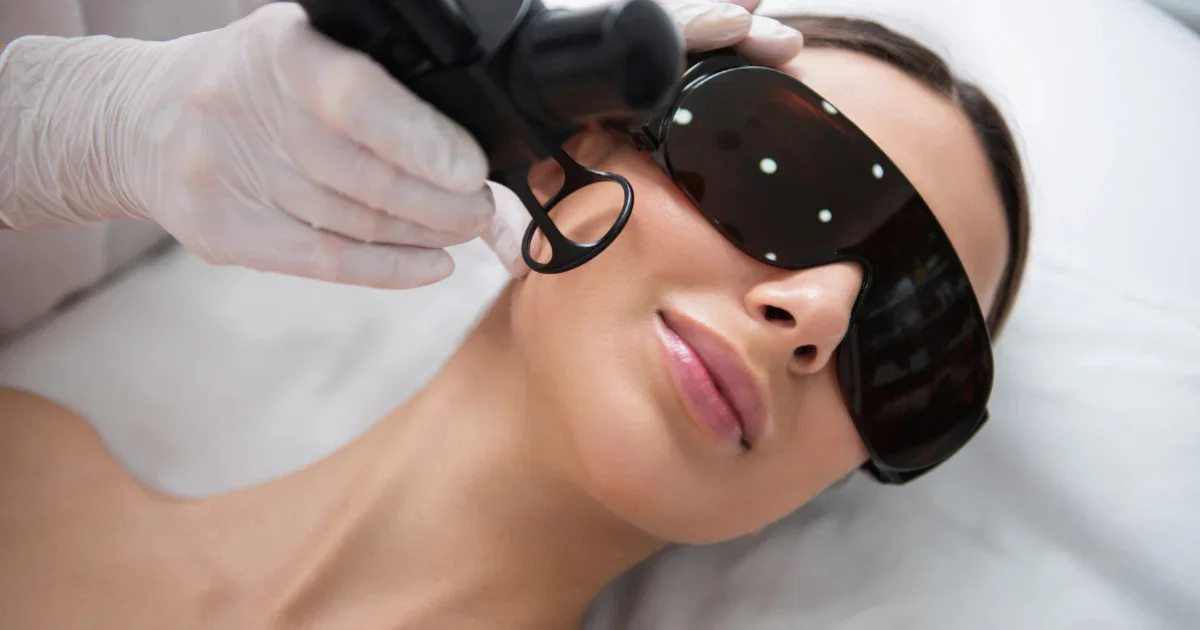
Three Operational Modes, One Platform
FINEXEL eliminates the need for multiple devices by integrating fractional, surgical, and gynecological capabilities.
Fractional Mode (FRX)
Controlled ablative resurfacing through micro-ablative columns for scars, wrinkles, and photoaging
Surgical Mode (CO₂)
Incision, excision, vaporization, and coagulation for benign skin lesions and minor surgery
Vaginal Mode (EVE)
Medical applications for genitourinary syndrome of menopause and vaginal laxity
Ultra-Pulse Technology
300W peak power with short pulse duration for minimal lateral thermal damage
CO₂ 10,600nm Technology: Scientific Fundamentals
Understanding laser-tissue interaction is essential for optimal clinical use.
Target Chromophore: Tissue Water
The 10,600nm wavelength is preferentially absorbed by intra and extracellular water molecules. Soft tissue contains approximately 70-75% water, making the CO₂ laser ideal for cutaneous ablation. The high absorption coefficient (approximately 800 cm⁻¹) results in an optical penetration depth of only 15-20μm per pulse.
Ablation Mechanism
When laser energy heats tissue water to 100°C, it vaporizes instantly, fragmenting and removing the overlying tissue. With optimized parameters, each pulse ablates 20-30μm of tissue, leaving a residual thermal damage (RTD) zone of 100-150μm. This controlled RTD produces small vessel coagulation (hemostasis) and stimulates the healing response.
Neocollagenesis and Dermal Remodeling
Controlled thermal damage triggers the healing cascade: acute inflammation → fibroblast proliferation → new collagen synthesis (type III initially, then type I) → long-term remodeling. Histological studies demonstrate increased dermal collagen density and elastic fiber reorganization at 3-6 months post-treatment, clinically correlated with improved skin texture and firmness.
Fractional Mode: Precision Ablative Resurfacing
Ablative fractional photothermolysis represents the logical evolution of classic CO₂ resurfacing, preserving efficacy while reducing morbidity.
Micro-Ablative Column Principle
The laser creates vertical ablation columns (microthermal treatment zones — MTZ) with 80-500μm diameter and depth up to 2.5mm, depending on parameters. Tissue between columns remains intact, serving as an epidermal reservoir for rapid re-epithelialization.
FINEXEL configuration allows up to 40,000 laser dots in a single exposure, with precise control of density (0.1-2.0mm spacing) and overlap (1-10 levels).
Advantages Over Full Ablation
- Re-epithelialization in 5-7 days vs. 2-3 weeks
- Reduced risk of permanent hypopigmentation
- Lower incidence of hypertrophic scarring
- Possibility of treatment on non-facial areas
- Applicable to darker phototypes (with caution)
Clinical Indications — Fractional Mode
Clinical note: Ice pick scars respond more modestly and often require adjunctive procedures (TCA CROSS, punch excision). Boxcar and rolling scars demonstrate 50-80% improvements in published clinical studies.
Surgical Mode: Precision Instrument
FINEXEL functions as a controlled optical scalpel, providing incision, excision, vaporization, and coagulation in a single instrument.
Incision
Vaporization
Coagulation
Hemostasis
Clinical Indications — Surgical Mode
Caution: Lesions with suspicion of malignancy require excisional biopsy with margins, not vaporization. CO₂ laser is not indicated for histopathological diagnosis of suspicious pigmented lesions.
Vaginal Mode: Medical Gynecological Applications
EVE mode uses fractional CO₂ energy to stimulate tissue remodeling in atrophic vaginal mucosa. Indicated exclusively for medical use under gynecological supervision.
Mechanism of Action
Fractional laser energy creates microzones of controlled thermal damage in vaginal epithelium and subepithelial tissue. The healing response includes:
- Fibroblast activation and new collagen synthesis (type III)
- Vaginal epithelial thickening
- Formation of new dermal papillae
- Neoangiogenesis and improved vascularization
- Increased epithelial glycogen deposits
Medical Indications
Important Clinical Considerations
- • Vaginal laser treatment is a therapeutic option, not a replacement for topical estrogen therapy for GSM
- • Patient selection must include complete gynecological evaluation and exclusion of contraindications
- • Results vary; some studies report efficacy comparable to topical estrogens, others more modest outcomes
- • Professional consensus is evolving; treatment should be offered within an informed physician-patient relationship
Ultra-Pulse Technology: Superior Thermal Control
Pulse quality determines clinical outcome. High peak power with short duration is superior to moderate average power with long duration.
Why Pulse Duration Matters
The thermal relaxation time (TRT) of cutaneous tissue is approximately 1-1.5ms. Pulses shorter than TRT allow efficient vaporization before heat diffuses laterally. FINEXEL delivers peak power of 300W, enabling rapid ablation with minimized residual thermal damage zone.
Clinical Benefits
- Deeper ablation with same total energy
- Reduced RTD (residual thermal damage)
- Faster post-procedural recovery
- Reduced risk of pathological scarring
- Diminished intra-procedural discomfort
Safety, Consistency, and Reproducibility
Clinical outcomes depend on parameter consistency. FINEXEL minimizes operator-dependent variability.
Uniform Spot Size
Stable Beam Profile
Pre-tested Parameters
What Differentiates FINEXEL from Other CO₂ Lasers
The market offers numerous CO₂ laser platforms with seemingly similar specifications. Real differences become evident in daily clinical practice, where parameter consistency, beam quality, and system reliability determine long-term outcomes.
Advanced CO₂ Technology with Ultra-Pulse Control
The 10,600nm wavelength remains the gold standard for cutaneous ablation, but not all systems deliver this energy equally. FINEXEL utilizes ultra-pulse technology with 300W peak power, enabling tissue vaporization in durations below the thermal relaxation time (~1ms). Systems with lower peak power or continuous mode overheat adjacent tissue before complete ablation occurs, resulting in unpredictable residual thermal damage (RTD) zones and prolonged recovery times.
Extremely Fine and Uniform Spot Size
FINEXEL offers spot diameters from 80μm (fractional mode) to 0.25-0.5mm (surgical mode), among the finest available in its class. More important than nominal size is uniformity: each micro-ablative column has exactly the same diameter and depth across the entire treatment area. Platforms with looser optical tolerances produce non-uniform spots, resulting in variable energy density—undertreated zones alongside overtreated zones.
Stable and Predictable Beam Profile
Energy distribution within each spot determines whether ablation is uniform or exhibits central "hot spots" that penetrate too deeply while margins remain undertreated. FINEXEL maintains a consistent TEM₀₀ beam profile (Gaussian or top-hat, depending on settings) throughout the procedure. Systems with unstable resonator cavities or degraded optics deliver non-uniform energy, increasing scarring risk in zones with excessive energy concentration and suboptimal results in adjacent areas.
True All-in-One CO₂ Platform
Many CO₂ systems are marketed as "complete" but offer only fractional mode with a rudimentary surgical accessory or require costly separate modules. FINEXEL natively integrates three complete operational modes: fractional (FRX) for resurfacing, surgical (CO₂) for excision and vaporization, and vaginal (EVE) for gynecological applications—all with optimized parameters and dedicated handpieces. This integration reduces total cost of ownership and simplifies clinical workflow.
Intelligent Preset Programs vs. Operator-Dependent Settings
Clinical outcomes vary dramatically based on parameters. FINEXEL includes clinically validated preset protocols for each major indication: atrophic scars, wrinkles, dyschromia, benign lesions, vaginal applications. These presets represent starting points based on experience from thousands of procedures, reducing the learning curve and inter-operator variability. Systems without presets or with generic settings leave parameter determination entirely to the operator, with increased risk of undertreatment or complications.
Faster Recovery and Reduced Complication Risk
The combination of ultra-pulse technology, uniform spot size, and stable beam profile results in predictable and consistent residual thermal damage (RTD) zones. Clinical implications: re-epithelialization in 5-7 days (vs. 10-14 days for systems with inferior thermal control), reduced risk of post-inflammatory hyperpigmentation (PIH) in phototypes III-IV, and lower incidence of post-procedural hypertrophic or atrophic scarring. For phototypes V-VI, precise RTD control becomes even more critical.
Reliability, Durability, and Real Clinical Support
A CO₂ laser represents a long-term investment. FINEXEL is manufactured by SNJ, a company with over 25 years of exclusive specialization in CO₂ technology and installations in over 600 clinics across 30+ countries. The RF-excited laser tube has extended lifespan without frequent replacements. In Romania, we offer: extended warranty, certified training for clinical staff, locally available spare parts, and nationwide service support. Equipment without local service infrastructure becomes unavailable for extended periods at any malfunction, affecting clinical business continuity.
Clinical Perspective
Differences between CO₂ platforms are not always evident from catalog technical specifications. Nominal power, wavelength, and spot dimensions appear similar on paper. The real distinction emerges in clinical practice: outcome consistency from patient to patient, long-term complication rates, patient-reported recovery times, and equipment reliability over thousands of procedures. We recommend practical clinical evaluation before purchase and discussions with clinics already using the system under conditions similar to yours.
SNJ: Exclusive Specialization in CO₂ Technology
About SNJ Co., Ltd.
- Founded: 1998, Seoul, South Korea
- Specialization: Manufacturer dedicated exclusively to medical CO₂ laser technology
- Experience: Over 25 years in CO₂ laser development and manufacturing
- Presence: Over 600 medical institutions in 30+ countries
- Recognition: First KFDA-approved CO₂ laser in the Korean industry
Certifications and Compliance
- FDA 510(k) — Clearance for US market
- CE Medical — European conformity
- KFDA — Korean medical device approval
- ISO 13485 — Quality management system
- GMP — Good manufacturing practices
Complete Technical Specifications
FINEXEL CO₂ Laser System
| Wavelength | 10,600nm (CO₂) |
| Maximum power | 40W (nominal 30W) |
| Peak power | 300W (ultra-pulse) |
| Fractional spot size | 80μm, 100μm, 180μm, 500μm |
| Surgical spot size | 0.25mm, 0.4mm, 0.5mm |
| Scan area | 1×1mm to 20×20mm |
| Energy per dot | 5 - 300 mJ |
| Density | 0.1 - 2.0mm / Overlap 1-10 |
| Scan shapes | Square, Rectangle, Triangle, Circle |
| Beam patterns | Standard, Alternate, Random, Scatter |
| Certifications | FDA 510(k), CE, KFDA |
Frequently Asked Questions — Clinical Perspective
Why is the 10,600nm wavelength the gold standard for ablation?
The 10,600nm wavelength of the CO₂ laser is preferentially absorbed by intra and extracellular water, an omnipresent chromophore in soft tissue. The high absorption coefficient results in an optical penetration depth of approximately 15-20μm, allowing precise tissue vaporization with a controlled residual thermal damage (RTD) zone of 100-150μm. This combination provides predictable ablation with simultaneous hemostasis through small vessel coagulation.
How does fractional mode differ from traditional full ablation?
Fractional mode creates discrete micro-ablative columns (microthermal treatment zones — MTZ) surrounded by intact healthy tissue. This untreated tissue serves as a cellular reservoir for rapid re-epithelialization, reducing recovery time from 2-3 weeks to 5-7 days. The healing process stimulates neocollagenesis and dermal collagen remodeling without the risks associated with complete epidermal ablation.
What advantages does ultra-pulse technology offer over continuous mode?
Ultra-pulse technology delivers high peak power (300W) in very short pulse durations, below the thermal relaxation time of tissue (approximately 1ms for tissue with 75% water content). This allows efficient vaporization with minimal lateral thermal diffusion. The result: deeper ablation with reduced RTD, faster recovery, and lower risk of pathological scarring.
Is FINEXEL suitable for all Fitzpatrick phototypes?
Yes, with parameter adjustment. For phototypes IV-VI, recommendations include: reduced energy per dot, lower density, longer intervals between sessions, and pre/post-treatment protocols with depigmenting agents. Careful monitoring for post-inflammatory hyperpigmentation (PIH) is essential. Fractional mode is preferable to full ablation for darker phototypes.
What is the mechanism of action in vaginal applications?
Fractional laser energy creates microzones of controlled thermal damage in the vaginal mucosa, stimulating fibroblast activation and new collagen synthesis (neocollagenesis). Histological studies show: increased epithelial thickness, formation of new dermal papillae, neoangiogenesis, and increased glycogen deposits. These changes contribute to functional restoration of atrophic mucosa.
What differentiates FINEXEL from other fractional CO₂ platforms?
FINEXEL combines three operational modes in a single medically certified platform: fractional, surgical, and vaginal. Technical specifications include: minimum 80μm spot for precision, 300W peak power for efficient ablation, 4 scanning patterns for clinical adaptability, and extensively pre-tested parameters. Manufacturer SNJ has over 25 years of exclusive experience in CO₂ laser technology.
Clinical Evaluation and Demonstration
For clinical demonstrations, detailed technical specifications, or discussions about integrating FINEXEL into your practice, contact the aEstet Technology team.
We are the authorized SNJ distributor in Romania. We provide technical consultation for physicians, certified operator training, and service support nationwide.
Request information
Fill out the form below and we will contact you with personalized details.
Contact form
Fill out the fields below to help us understand your context and provide you with a relevant response.